The Latest

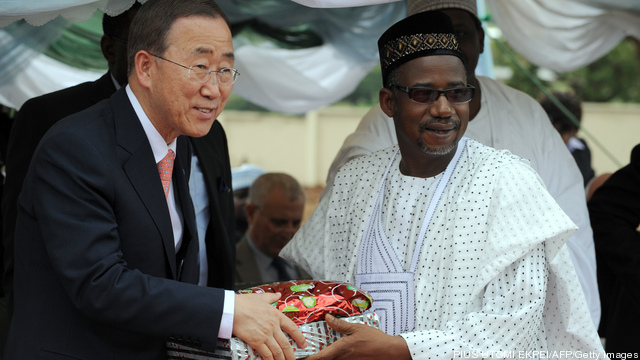
The United Nations identified needed developments to eliminate the worst of world poverty in a program called the Millennium Development Goals. The key is to foster conditions for market-driven economic growth to create a safe infrastructure that includes the people most in need as empowered participants, not mere recipients of a handout. Success would eliminate current ineffectual foreign aid programs and uncoordinated charitable aid in favor of growth by-and for-the people.

In response, the IEEE (Institute of Electrical and Electronic Engineers) established a pilot program which identified Reliable Electricity as one of the key enablers of economic growth, especially in areas of the globe containing nearly 2 billion people subsisting on incomes of less than $2US per day. The correlation of poverty with lack of electricity is obvious, but solutions that truly effect sustaining economic change are not. Fortunately, we have learned that a small amount of electricity can have a huge benefit at an affordable cost. Moreover, the technology already exists to create a sustainable business model that, in principle, can grow rapidly to reach millions of people. Keep reading →

Who will be America’s Next Top Energy Innovator? You choose: http://go.usa.gov/nBb ENERGY


Commercially viable cellulosic ethanol has held revolutionary promise as a fuel source for years, and now life and materials sciences giant Royal DSM and ethanol producer POET LLC are joining up to demonstrate and license “the next step in the development of biofuels.”

The new joint venture, called POET-DSM Advanced Biofuels, is scheduled to start production in the second half of 2013 at a facility called Project Liberty. The facility is currently under construction adjacent to POET’s existing corn ethanol facility in Emmetsburg, Iowa and will produce 20 million gallons of fuel in its first year before hitting an anticipated pace of 25 million gallons of cellulosic ethanol each year. Keep reading →


Vermont’s electricity grid is learning to talk back, thanks to a partnership between technology giant IBM and the state’s VELCO transmission company that the firms say is a model for smart grid efforts across the US.

A new communications and control network will be stung along more than 1000 miles connecting transmission substations to Vermont’s distribution utilities as part of efforts to improve power grid reliability and security, the companies said in announcing their partnership at the DistribuTECH conference this week. Keep reading →


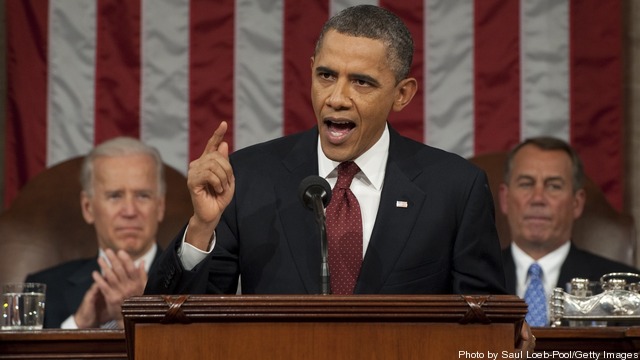
In his third state of the Union speech, President Obama kept energy as “pillar” of economic recovery and made natural gas the pivot point.

While endorsing an “all of the above” energy strategy, he added little new from the policies of the last three years, and no real surprises. Keep reading →


For the third year in a row energy played a central role in President Obama’s State of the Union address, with the president leaning hard this year on the twin themes of increased domestic oil and gas production and the need to invest more in renewable sources. “Right now, American oil production is the highest that it’s been in eight years,” said Obama. “Not only that — last year, we relied less on foreign oil than in any of the past sixteen years.” Obama has indeed presided over a boom in domestic energy production since taking office. From 2008 to 2011 U.S. crude oil production has jumped 14%, going from 5.1 million barrels per day at the start of 2008 to nearly 5.8 million barrels per day currently, according to the U.S. Energy Information Administration.


New England’s policies supporting building increased renewable generation is underpinning pressure to invest in new transmission infrastructure in the region, with advocates for new power lines saying the projects will boost employment and alleviate existing high regional electricity costs.

Each of the six states in the New England region has “some form” of renewable energy portfolio standard, the organizers of the New England Clean Energy Transmission Summit held this week in Boston, said. Those state policies align with federal policies that enable strategic planning and cost-allocation of new transmission ensuring renewable generation access to power markets. Keep reading →


Not much expected, not much gained – except for a significant all-inclusive twist.

The United Nations’ latest Conference of Parties (COP) on climate change followed the usual script. A couple of weeks of acrimonious debate leading to near failure, followed by heroic last minute efforts to save the conference from total ruin, just so the attending delegates could fly home in time for the holidays and report to their respective governments that they will be attending another event in a year’s time in Qatar. Keep reading →


The US will “dramatically” reduce its oil import dependency between now and 2035, with imports declining from 49% today to 36%, Energy Information Administration Acting Administrator Howard Gruenspecht said Monday in Washington, DC.

In 2005-6, imports reached their record, 60% of US consumption. Keep reading →

Page 822 of 9251...818819820821822823824825826...925