Siemens


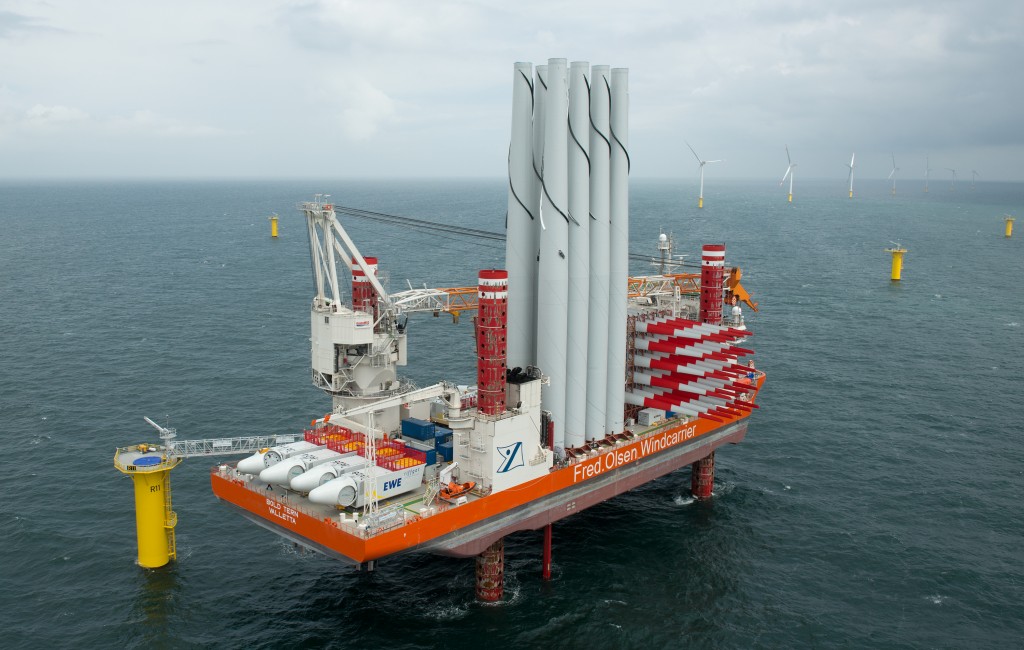
The US wind power industry had a banner year in 2012, as developers raced to bring on projects before the federal production tax credit was set to expire at the end of the year. The frantic rush to take advantage of the tax incentive resulted in some impressive statistics highlighted in the American Wind Energy Association’s U.S. Wind Industry Annual Market Report for 2012, released Thursday.

Breaking Energy recently sat down with AWEA’s vice president of public affairs Peter Kelley ahead of the launch to gain some insight into what made 2012 so important and what to expect from the industry going forward. Keep reading →


They took it right to the edge, but the US wind energy business managed to rescue the production tax credit around which many of their projects and manufacturing investments are structured. In the process Capitol Hill supporters of the sector rescued a claimed 37,000 jobs and the supply chain for a rapidly expanding form of power generation.

The effort to rescue the wind energy PTC and the also-extended investment tax credit (ITC) was not directly linked to the fiscal cliff debate, but became intertwined with the calendar-driven effort to prevent earlier tax cuts and credits from expiring without any replacement policy in place. The inclusion of the wind energy PTC, which was thought to be sufficiently likely to expire that companies spent significant sums as they rushed to turn on wind farms before the end of 2012, speaks to the expanded power of the wind industry groups in Washington, DC and the increased centrality of the wind energy business to major infrastructure and engineering firms with substantial US manufacturing operations including GE Energy, Siemens and Vestas. Keep reading →


One criticism of wind and solar power is their lack of reliability. Both depend on the weather for energy production and any change in weather affects their ability to produce electricity. In many regions, wind has the added liability of producing power when it is least needed. To solve this challenge, some suggest pairing standby generators with wind and solar farms so continuous power can be produced. Under this scheme, proponents argue that standby generators should be capable of varying its output to assure continuous energy production.

Varying output is called load following or turn down. The physical objective is to throttle back power generation to response to changing demands. The financial objective is to turn down without increasing fuel consumption on a unit basis. The environmental objective is to minimize air pollution, specifically carbon. Keep reading →


While Germany’s once soaring photovoltaic sector is going through very hard times – a consequence primarily of cheap Chinese imports – the country’s wind energy sector, also a market leader, has so far managed to stay on its feet. But the industry is not booming like it did just a few years ago and is scaling back its expectations for 2012. Experts in Germany say that the German wind industry should expect even tougher competition coming its way soon, possibly from China.

In Germany one of the country’s solar panel manufacturers after another closed their doors over the past year and a half: Battling with China and other new competitors the world-wide industry created a glut and prices went tumbling down in 2009 and 2010. With them went under what had been several of the choicest success stories of Germany’s post-unification economy, many of them in the former eastern Germany which had benefited immensely from the upstart renewables industry. Keep reading →


In the latest illustration of the potential of the Marcellus Shale to boost regional energy supply, two natural gas-fired power plants are being planned for the heart of northern Pennsylvania’s shale country.

If they go into operation as planned by early 2016, they would be the state’s first plants to be powered by gas from the Marcellus, the massive Appalachian formation that’s estimated to contain enough of the fuel to meet total US needs for 20 years or more, at current consumption rates. Keep reading →


In the United States, utilities have been switching fuels for the power generators. While many commentators believe the motivation to switch is regulatory, the primary incentive is economics.

Of course, the Environmental protection Agency’s (EPA) new coal and coal-fired power plant rules influence a utility, but the markets are the primary driver behind utilities to seek fuel options. EPA’s rules are not the prime mover, at least not now. Keep reading →

US President Barack Obama tours the General Electric Plant with GE Chairman and CEO Jeffrey Immelt (L) and plant manager Kevin Sharkey January 21, 2011 in Schenectady, New York.

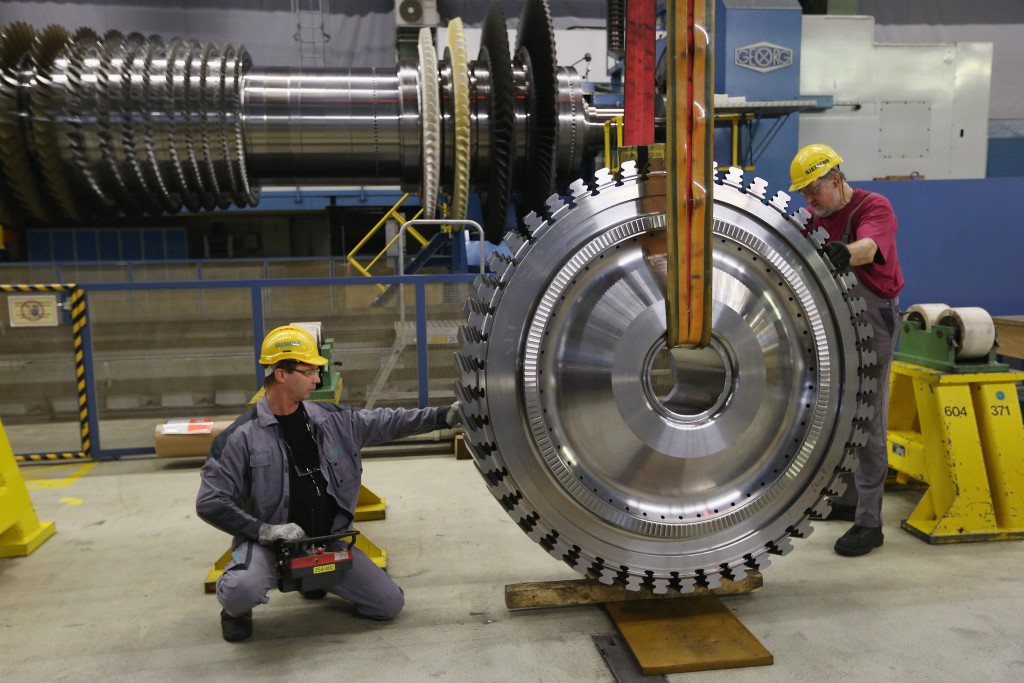
General Electric recently announced $1.2bn orders for its new FlexEfficiency 60 turbine, which the company claims is a step change for the industry in its ability to supply both baseload power and ramp quickly to smooth intermittent loads from solar and wind. Keep reading →


Energy venture capital is a challenging business in the best of times, but greater competition from large non-traditional players and lingering economic weakness in many of the world’s largest economies mean that, more than ever, finding and doing successful deals requires a disciplined, yet open minded approach.

The entrance of large companies into the energy venture capital space, the US elections’ impact on investment cycles, identifying opportunities and dominant sector trends were just a few of the topics Breaking Energy recently discussed with Dr. Wal Van Lierop, CEO of Chrysalix Energy Venture Capital. Keep reading →

Blessed with abundant surface water resources and a considerable amount of associated hydroelectric power, Brazil has lots of renewable energy, and a lot of room to generate additional power from renewable sources like wind and solar.

Brazil is the world’s second largest hydro power consumer behind China, but a sharp contrast between wet and dry seasons – along with occasional droughts – has driven the country to import LNG in recent years to supplement its energy security. Keep reading →

It isn’t gold.

Weakening venture capital funding for one of the globe’s fastest-growing sectors isn’t a mystery for sector watchers, but with increasing adoption of disruptive monitoring technology, the market opportunity isn’t a matter of if, but when. Keep reading →

Page 1 of 41234