IT


If you are looking for Breaking Energy on Monday morning, you’ll find us at breakingenergy.com. There you will find the same coverage, the same resources, and the same team, with some minor adjustments.

We will also stick to the same goal – to continue covering energy market complexities in an accessible manner, from the oil & gas value chain to renewable energy project development, the evolving nuclear industry and other critical domestic and international energy issues. We will continue to do our best to represent all stakeholder voices, from industry to the environmental community, regulatory bodies and investors. We are a safe place for energy discourse, where the industry community can obtain, share and disseminate information and ideas. Keep reading →


As we transition over from Breaking Energy to the new Breaking Energy site on May 6, we will be offering a new feature that seeks to explain, in simple, accessible language, some of the terms that we throw around in our stories. We will also provide links to help direct you to resources that can offer more exhaustive detail.

There’s no reason an electrical engineer should be able to make the immediate mental leap from GTL to gas-to-liquids, the expensive process that can turn gas into liquid automotive fuel, or that an oil and gas lawyer will have any idea what ISO stands for (Independent Systems Operator). We aim to make our coverage accessible to as wide an energy audience as possible, and we also hope to offer a resource for newcomers to the energy industry who just don’t speak the language yet. Keep reading →



We’d like to give our readers a heads-up about some impending changes at the site. As some of you know, Breaking Energy was acquired by Breaking Media, and as of Monday, May 6, all readers will be redirected to Breaking Energy at www.breakingenergy.com.

What’s the Same: Keep reading →


At last week’s launch of Columbia University’s Center on Global Energy Policy, author and energy analyst Daniel Yergin talked about what he sees as today’s three big energy questions. Dr. Yergin recently released a new book entitled “The Quest,” which follows up on his Pulitzer-winning history of the global oil industry, “The Prize.”

1) Is there enough energy? Will we run out? A few years ago peak oil was a common topic and dark days were seemingly ahead – demand was concentrated in OECD countries and ROW (rest of world) was just the tail until about 2004 when demand in emerging markets exploded, said Yergin. But every time it seems we are running out of oil, he went on to say, technology helps find and develop more, like we have now with shale and tight oil & gas. However, while concerns about peak oil may not be as urgent as they seemed a few years ago, new challenges have arisen, and “it’s still sobering to look at these energy challenges,” he said. Keep reading →


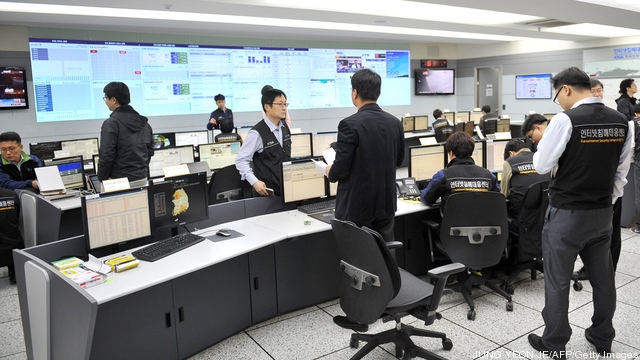
We’ve all read the cyber-attack and data breach headlines about Stuxnet, Flame, Shamoon, and most recently, Red October. Critical infrastructure cyber attacks were even a focus of the President Obama’s State of the Union Address.

Organizations that operate critical infrastructure – including oil and gas companies, utilities, nuclear facilities, and more – is well aware it’s under attack. The problem right now is that many of these organizations are struggling to figure out how the protect themselves from potentially devastating attacks. Keep reading →


A Boston startup has turned into a leading building performance analytics provider in recent years as it has helped property owners save significant sums by monitoring their utility data. The company, called WegoWise, now says it has the “largest database of utility in multifamily buildings,” and is extending its platform to cover commercial property as well.

One of their first commercial property customers is Liberty Property Trust, a $7 billion REIT currently using WegoWise to track utility usage over 2.9 million square feet of its portfolio, and is rolling out usage across its 81 million square feet of property. Keep reading →


DOE’s Clean Energy Manufacturing Initiative would accelerate manufacturing of clean energy products and strengthen competitiveness of the U.S. clean energy sector in the global energy market.

On March 26, 2013, the Department of Energy (DOE) announced a new program – the Clean Energy Manufacturing Initiative – to support manufacturing of clean energy products in the U.S. The DOE announced the initiative at the opening of its Oak Ridge Carbon Fiber Technology Facility in Tennessee. The facility manufactures cost-efficient and lightweight carbon fiber used in electric vehicles, energy storage components, and wind turbines. According to the DOE, carbon fiber can reduce the weight of a passenger car by 50% and enhance fuel efficiency by approximately 35%. DOE estimates that the material could cut the weight of vehicles by up to 750 pounds by 2020. Keep reading →


Power markets have always been a complex proposition, perhaps especially so in the places where they could do the most good. How to price the creation and delivery of a commodity that can’t be stored, is technologically complex to ship and often dirty to create where it isn’t unreliable?

Transmission is the central component of the traditional power market. The lines and towers are the only thing that can make power flow from lower priced areas to higher priced areas, and as part of managing access the administrators of these markets have begun to charge for Congestion Revenue Rights. In California, those CRRs have become a major market, with banks, trading houses and power marketing firms all getting in on the action since trading began in 2009. Keep reading →


The Korea Smart Grid Association is launching a national program to encourage and support the creation of smart grid patents that meet international standards. Energy Korea reported that the organization is supporting companies, universities and research institutions that want international patents. The association is taking the lead in developing technologies and standards that can be baked into future patents.

The association also has a special emphasis on strengthening the global competitiveness of innovative small and mid-sized businesses, which would not normally have the sophistication necessary to deal with international patent issues. It is also emphasizing technologies that can become de facto standards or “platforms” that “can enjoy both market power and monopolistic strength.” Keep reading →


Even in an era of struggling economic growth, it makes sense to invest money in efficiency and cost savings efforts. For companies that provide those services in the energy sector, the traditionally often wasteful approaches of companies accustomed to cheap or subsidized supply is a huge opportunity as many finally bite the bullet and invest in industrial efficiency.

That’s the message behind the results of global power and automation technology giant ABB’s results from its US operations in 2012, the company said at a customer conference in Orlando this week. The firm has invested $10 billion US manufacturing and software since 2010, including the acquisition of electric products Baldor, components firm Thomas & Betts and software firm Ventyx. Keep reading →

Page 1 of 3512345...35